

Choosing the right tennis string is just as important as choosing the right racket. Strings are the part of your equipment that actually makes contact with the ball, and they can have a significant impact on power, control, spin, comfort and feel. The same racket can play very differently depending on the type of string, gauge and tension used.
However, there is no single “best” tennis string. Every string is a compromise: greater control may come at the expense of power and comfort, while a softer, more powerful string may offer less durability or spin potential. The key is finding the right balance for your playing style, ability, physical needs and budget. This guide explains the five main categories of tennis string, polyester/co-polyester, natural gut, multifilament, synthetic gut and hybrid, to help you understand the differences and choose the best setup for your game.
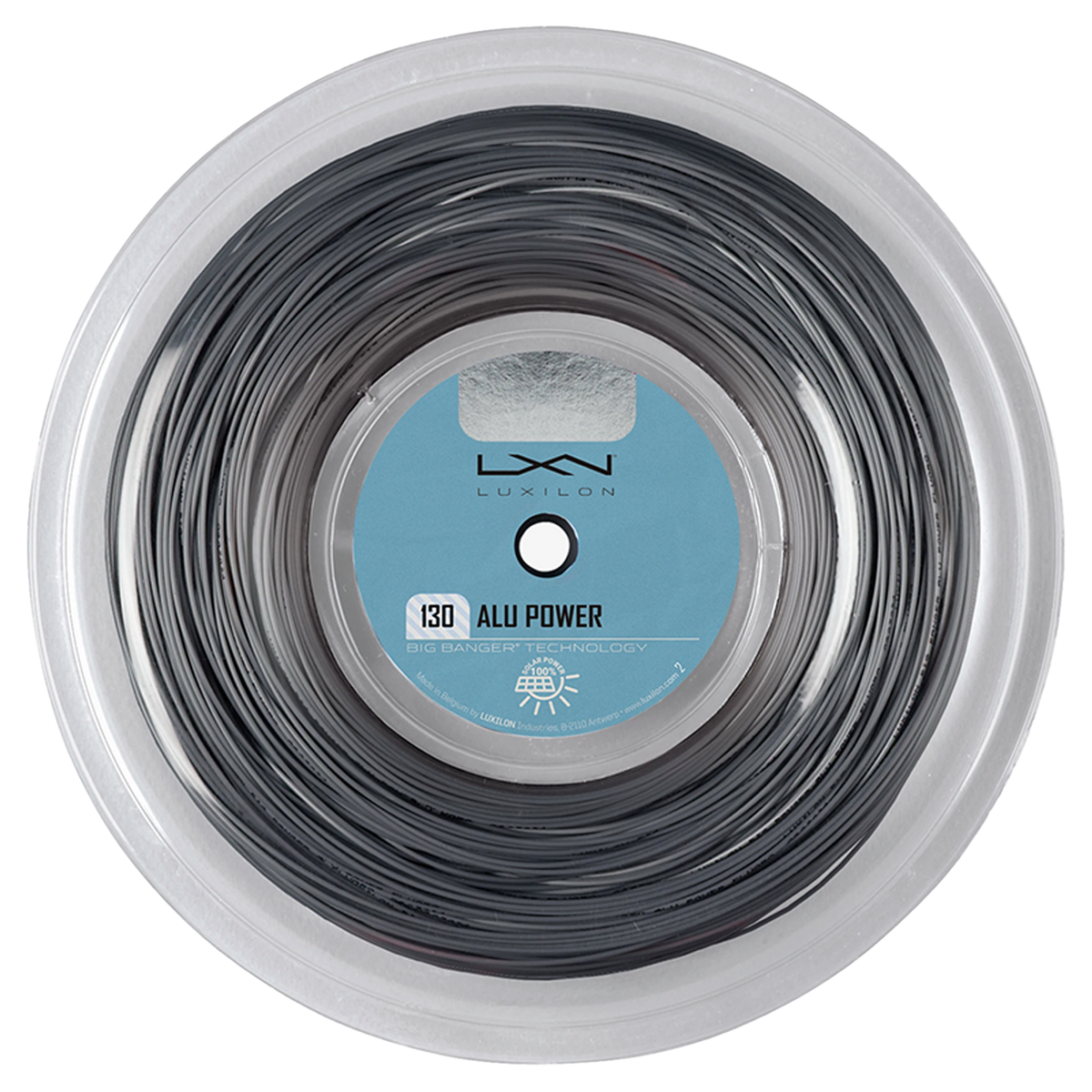
Polyester
Mid range price
Best for Intermediate to advanced players with fast, full swings.
Excellent control, spin potential, and resistance to string movement.
Stiffer and less arm-friendly; loses playing characteristics before it physically breaks.
Heavy hitters and topspin-focused baseline players.
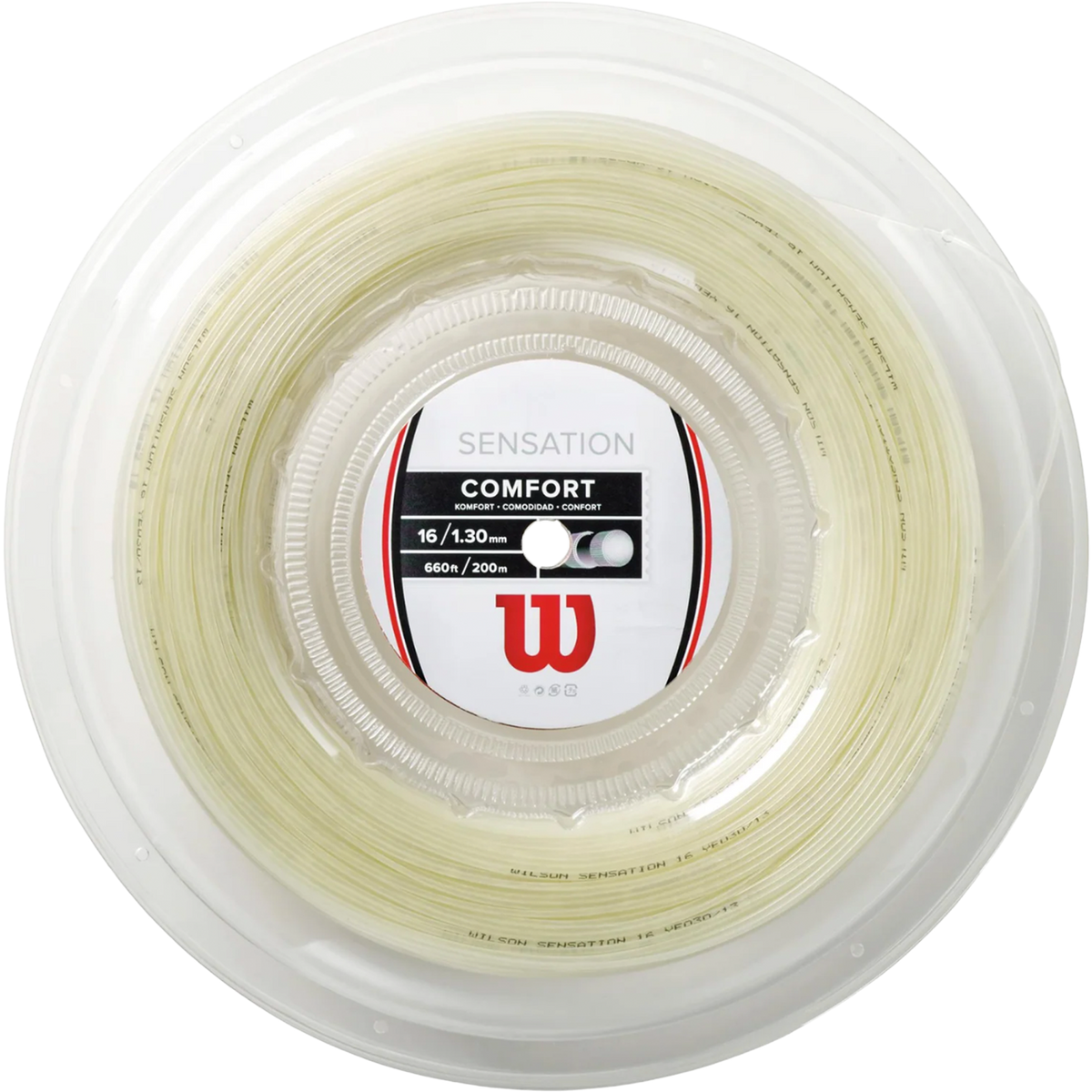
Multifilament
Mid range price
Best for beginners through advanced players seeking comfort and easy power.
Soft, arm-friendly feel designed to imitate some qualities of natural gut.
Generally less durable and offers less spin/control than polyester.
Recreational players, flatter hitters, and players with sensitive arms.
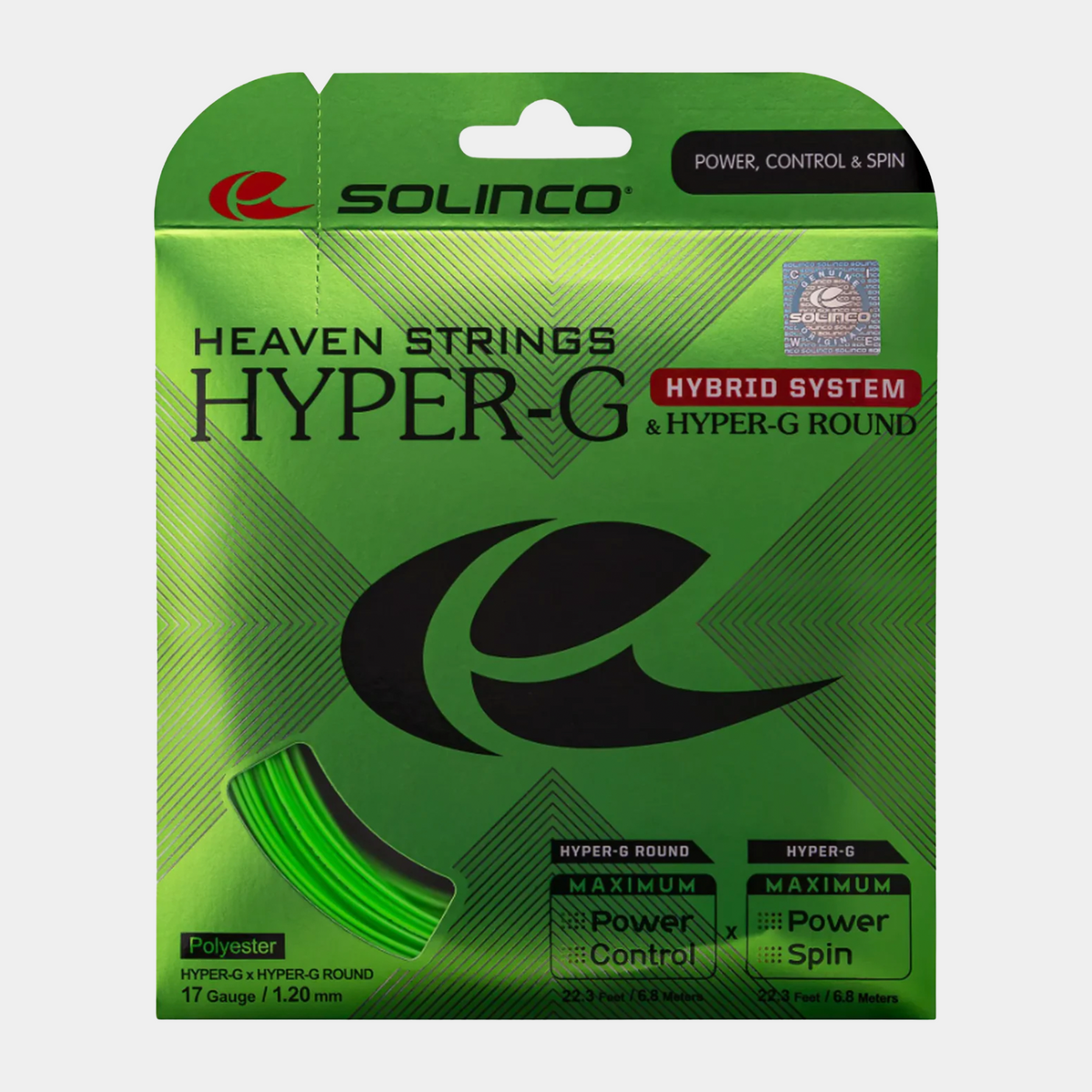
Hybrid
Mid range price
Best for Intermediate to advanced players wanting to combine different string characteristics.
Customisable balance of control, spin, power, comfort, and durability.
Performance and lifespan vary significantly depending on the combination and which string is used in the mains.
Players with specific performance requirements, for example, polyester for control combined with multifilament or natural gut for comfort and power.
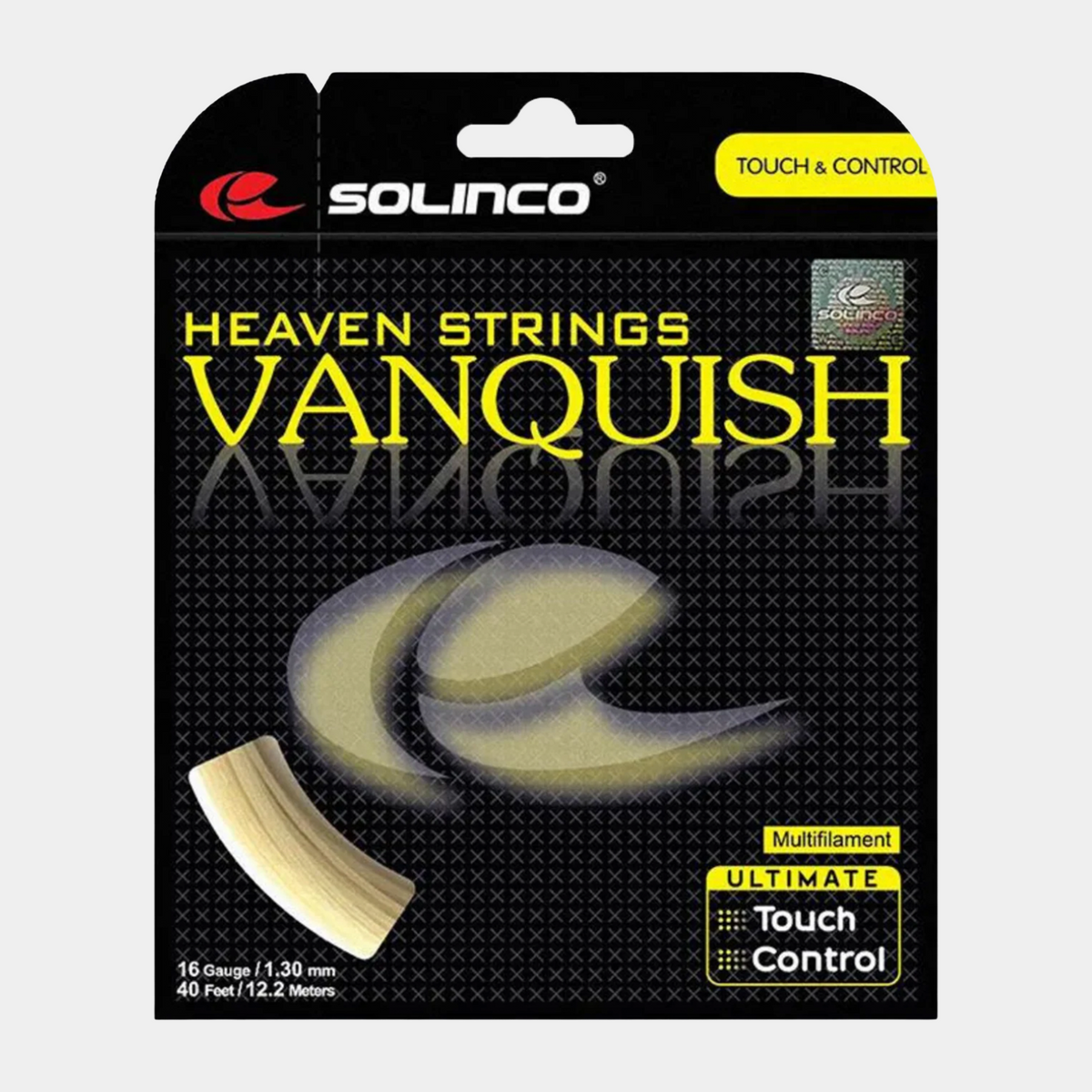
Synthetic Gut
Usually the most affordable option.
Best for Beginners, recreational players, and anyone wanting balanced performance.
Good combination of power, comfort, durability, and value.
Does not excel in any single performance category compared with specialist strings.
Beginners and club players who want a reliable, cost-effective setup.
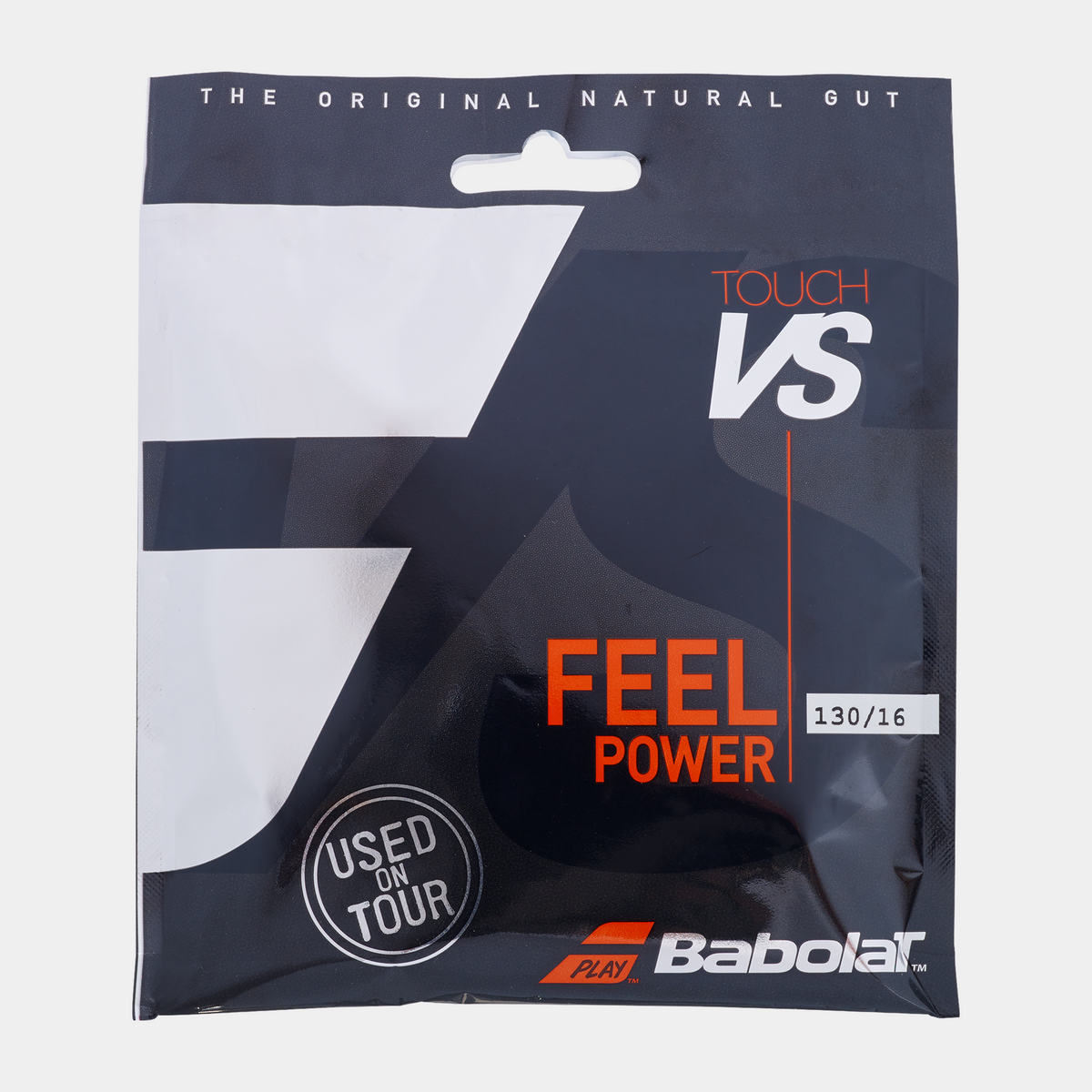
Natural Gut
The most expensive string type.
Best for Players wanting maximum comfort, power, feel, and tension maintenance.
Outstanding elasticity and maintains performance exceptionally well.
Expensive and more vulnerable to moisture and premature wear.
Players with arm issues, feel-oriented players, and those prioritising premium performance.
string gauges
Tennis strings are available in a range of gauges (thicknesses), with the most common being 17L (1.20mm), 17 (1.25mm), 16L (1.28mm), 16 (1.30mm) and 15L (1.35mm). As a general rule, thinner strings offer more spin, feel and power, while thicker strings provide greater durability and a more controlled response.
- 17L Gauge (1.20mm): A thin string that delivers excellent spin, feel and ball pocketing. Best suited to advanced players with fast swing speeds who don't mind restringing more often.
- 17 Gauge (1.25mm): The most popular choice, offering an outstanding balance of spin, control, feel and durability. Ideal for the majority of intermediate and advanced players.
- 16L Gauge (1.28mm): Sits between 17 and 16 gauge, providing a little more durability than 1.25mm while retaining much of its feel and spin potential. A great all-round option for regular club players.
- 16 Gauge (1.30mm): A durable choice that sacrifices a small amount of feel for longer string life and improved tension stability. Recommended for frequent players and those who break thinner strings.
- 15L Gauge (1.35mm): The thickest commonly available gauge, designed for maximum durability. Best for heavy hitters, chronic string breakers and players who prioritise longevity over feel and spin.
For most players, 17 Gauge (1.25mm) is the ideal starting point, offering the best balance of performance and durability. If you regularly break strings, consider moving up to 16 or 15L gauge, while players chasing maximum feel and spin may prefer 17L gauge.
string tensions
String tension plays a major role in how a tennis racket feels and performs. Measured in kilograms (kg) or pounds (lbs), tension determines the balance between power, control, comfort and spin. Lower tensions provide more power and a softer feel, while higher tensions offer more control and a firmer response.
Most rackets are strung between 20–30kg (44–66lbs), with the ideal tension depending on your playing style, racket, string type and personal preference.
- Low Tension (20–23kg / 44–51lbs): Produces more power, increased ball pocketing and a softer feel. Lower tensions can also help generate spin by allowing the strings to move more freely. Best suited to players looking for extra depth, comfort or those with shorter, slower swings.
- Medium-Low Tension (23–25kg / 51–55lbs): Offers a strong balance between power, comfort and control. A popular choice for recreational and intermediate players who want a forgiving setup without losing too much precision.
- Medium Tension (25–27kg / 55–60lbs): The most common range for club and advanced players, providing a balanced combination of control, feel, power and spin. A great starting point for most players experimenting with their ideal setup.
- High Tension (27–30kg / 60–66lbs): Creates a firmer string bed with increased control and a more direct response. Best suited to advanced players with powerful swings who generate their own pace and want maximum precision.
- Very High Tension (30kg+ / 66lbs+): Provides an extremely controlled feel but significantly reduces power and comfort. Generally used only by advanced players with specific preferences and excellent technique.
As a general guide, beginners and players seeking more power should consider lower tensions, while advanced players who generate their own pace may prefer higher tensions for added control. For most players, a starting point around 24–26kg (53–57lbs) provides a versatile balance of performance and comfort.
You can also vary the tension between the mains and crosses to fine-tune your racket’s performance. Using a higher tension in the crosses can create a firmer, more controlled feel, while a higher tension in the mains can increase string movement, spin and power. Many players use a small difference of 1–2kg (2–4lbs) between mains and crosses to adjust the feel, especially with hybrid setups where different strings are combined.